Showing posts with label neem oil. Show all posts

Monday, April 24, 2017

Why Are Roses in Vineyards?


Quiz time:
The reason wine grape growers place rose bushes at the end of their vineyard rows:
a) To alert them to a powdery mildew outbreak;
b) To alert them to an insect infestation;
c) Red roses mark the rows of red wine grapes; white, the white wine grape varieties.
d) They're pretty.

 d) is correct. Different strains of powdery mildew attack roses. Insects that bother both would attack the grapes first. And if the color of the rose indicated the varietal, then an apricot colored rose would mean that they are growing grapes for Boone's Farm Strawberry Hill wine.

Sacramento County Farm Advisor and Viticulture specialist Chuck Ingels says the practice may have been tried in Europe a long time ago to detect powdery mildew early, but it doesn't work. The mildew species that attacks grapes is a completely different species from that of the rose powdery mildew; and, they have different temperature requirements. Also, roses are more prone to get aphids; grapes, not so much.

For those at home keeping score:
Powdery mildew species on grapes: Erisiphe necator.
Powdery mildew species on roses: Sphaerotheca pannosa


Viticulture instructor Andy Walker at UC Davis says that roses are planted strictly for aesthetics.


This practice probably started in the early 20th century and continues to today; the myths and the stories about it came along the way.

One blogger took a trip to the vineyards of Italy recently where the winemaker discussed the issue: 
"Singore Razzi explained how they grow the grapes for their wine. We wondered why there were rose bushes at the end of each row of grapes and found out that very sophisticated tests were done by scientists on the soil and after those tests, the rose bushes were planted to tell the wine master how the soil is doing. If the roses stay fresh and perfect they know the grapes are doing just as well...when a bush is 'sick' they know those grapes growing in that row are 'sick' also.”


No winemaker is going to rely on roses to tell them about the quality of the wine. But it certainly impresses visitors; and, they probably bought more wine because of this sophisticated-sounding yarn.

So, how do wine grape growers control powdery mildew? With a rather large arsenal of chemical weapons. And for a good reason. Powdery mildew can develop a resistance if the same product is used over and over. According to the University of California Integrated Pest Management Program:

"Alternating fungicides with different modes of action is essential to prevent pathogen populations from developing resistance to classes of fungicides. This resistance management strategy should not include alternating or tank mixing with products to which resistance has already developed. Rotate with fungicides that have a different mode of action. Research has shown that sequential sprays of products with the same mode of action can lead to the development of reduced sensitivity to the active ingredient(s). Some fungicides have two active ingredients and thus two modes of action. When using such materials, do not alternate with other fungicides that contain one of the same modes of action (i.e. they represent the same fungicide class)."

Home gardeners and organic growers have a more limited selection to control powdery mildew.
According to UC IPM:

"Powdery mildew is a perennial problem in grapevines. Sulfur, horticultural oils, neem oil, jojoba oil, and Serenade are registered for controlling powdery mildew in home vineyards.
Begin applying treatments when all buds have pushed. Thereafter, repeat at 10-day intervals if disease pressure is high; otherwise, extend intervals when temperatures are above 90°F until the sugar content of the grapes is 12 to 15%, which is when they begin to soften and approach ripeness and are no longer susceptible to infection.
You can measure the sugar content with a refractometer, if you have access to one, or you can see if sample berries sink in a 15% sucrose solution. (Prepare the sucrose solution by dissolving 8-1/2 teaspoons of table sugar in a half cup of warm water, then mixing in enough cold water to make the total volume 1 cup.)"

More information about these products:


Fungicides. Several less-toxic fungicides are available for backyard trees and vines, including horticultural oils, neem oil, jojoba oil, sulfur, and the biological fungicide Serenade. With the exception of the oils, these materials are primarily preventive. Oils work best as eradicants but also work as good protectants. The fungicides listed here are registered for home use.

Oils. To eradicate powdery mildew infections, use a horticultural oil (such as Saf-T-Side Spray Oil, Sunspray Ultra-Fine Spray Oil) or one of the plant-based oils such as neem oil (such as Green Light Neem Concentrate) or jojoba oil (such as E-rase). Be careful, however, never to apply an oil spray within 2 weeks of a sulfur spray or plants may be injured. Some plants may be more sensitive than others, however, and the interval required between sulfur and oil sprays may be even longer; always consult the fungicide label for any special precautions. Also, oils should never be applied when temperatures are above 90°F or to drought-stressed plants. Horticultural oils as well as neem and jojoba oils are registered on a wide variety of crops. 

Sulfur. Sulfur products have been used to manage powdery mildew for centuries but are only effective when applied before disease symptoms appear. The best sulfur products to use for powdery mildew control in gardens are wettable sulfurs that are specially formulated with surfactants similar to those in dishwashing detergent (such as Safer Garden Fungicide). To avoid injury to the plant or tree, sulfurs should not be applied within 2 weeks of an oil spray, used on any plant when the temperature is near or over 90°F (80°F for caneberries and strawberry), and never applied at any temperature to apricot trees.

Biological Fungicides. Biological fungicides (such as Serenade) are commercially available beneficial microorganisms formulated into a product that, when sprayed on the plant, inhibit or destroy fungal pathogens. The active ingredient in Serenade is a bacterium, Bacillus subtilis, that helps prevent the powdery mildew from infecting the plant. While this product functions to kill the powdery mildew organism and is nontoxic to people, pets, and beneficial insects, it has not proven to be as effective as the oils or sulfur in controlling this disease.

Tuesday, January 10, 2012

Controlling Sooty Mold


From the garden email bag, Gus from Lodi wants to know: “We have a great crop of oranges now despite the fact that many of the fruit and leaves are coated with a black substance that is easily washed off of the fruit. The fruit tastes great. Can you help? Thanks.”
 
 
That substance may be sooty mold, which is a fungus that results from the excrement of sucking insects such as aphids or scale.


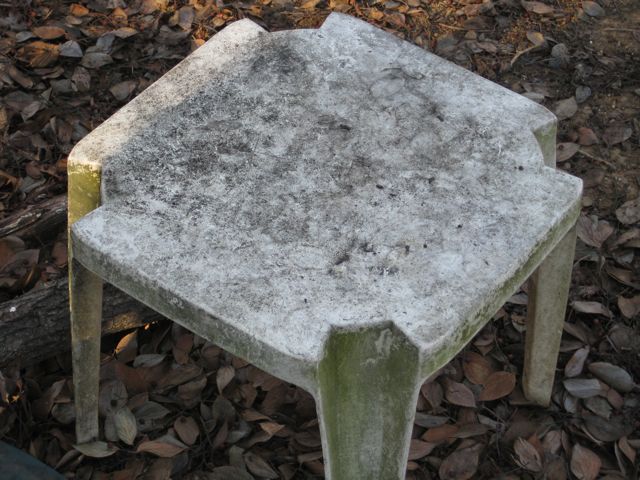
According to the UC Davis Integrated Pest Management experts, sooty molds do not infect plants but grow on surfaces where those excrement deposits accumulate. This excrement, also known as honeydew, is a sweet, sticky liquid that plant-sucking insects excrete as they ingest large quantities of sap from a plant. Because the insect cannot completely utilize all the nutrients in this large volume of fluid, it assimilates what it needs and excretes the rest as honeydew. Wherever honeydew lands - leaves, twigs, fruit, yard furniture, concrete, sidewalks, or statuary - sooty molds can become established.

Although sooty molds do not infect plants, they can indirectly damage the plant by coating the leaves to the point that it reduces or inhibits sunlight penetration. Without adequate sunlight, the plant’s ability to carry on photosynthesis is reduced, which can stunt plant growth. Coated leaves also might prematurely age and die, causing premature leaf drop.
 
And as you pleasantly discovered, fruits or vegetables covered with sooty molds are edible. Simply remove the mold with a solution of mild soap and warm water.

To thwart any new outbreaks of sooty mold, do not overprune, overfertilize or overwater your pest-prone plants, says the University of Florida Ag Service. These bad habits can create weak, succulent new growth on the plants, a delicacy for sucking insects.


Beginning of sooty mold. Note the small white mass of scale on the stem.
To control sooty mold, you have to control the pests. On citrus, soft scales, such as cottony cushion scales, are the usual culprits. This scale can be controlled with a light horticultural oil when the scale are in their crawling stage.
Cottony cushion scale on mandarin branch

Sooty mold can attack any plant that may have an infestation of other sucking insects, especially aphids, leafhoppers, psyllids, and mealybugs.

The UCD IPM pros also advise against using insecticides containing the active ingredient imidacloprid for controlling this pest. Although scale is listed on the label as a pest that it can control, it is not effective against cottony cushion scale. 

Photo courtesy UC IPM

 To complicate matters, imidacloprid will reduce populations of the beneficial insect, the vedalia beetle. Both the adults and larvae of the Vedalia beetle feed exclusively on the cottony cushion scale on a variety of plants including rose, acacia, magnolia, olive, and citrus.


One product that can help control many of these pests, while washing off the sooty mold from leaves or fruit, is insecticidal soap. Even a blast of water from the hose can help wash off the sooty mold without harming any beneficial insects that might be trying to help you out. Horticultural oils or Neem oil can also suppress scale populations.

Also, look for ants crawling up and down the tree. Control the ants, and you can control the pests...as well as the sooty mold. Ants herd and protect sucking insects from beneficial insects, in order to harvest the honeydew for the ant colony.

Baits containing boric acid placed around the base of the tree will control ant populations in a couple of weeks. Sticky substances, such as Tanglefoot, although messy, can stop ants. See this previous post on ant control.


For plastic or painted surfaces that might have sooty mold, the USDA recommends this cleaning solution:


1/3 cup powdered household detergent 
1 quart household liquid bleach
2/3 of a cup of Trisodium phosphate
3 quarts of water. 

Be sure to wear rubber gloves when cleaning with this solution.

Wednesday, July 14, 2010

Aphids!


A morning stroll through the garden is always revealing. The low angle of the sun highlights plant features that you might miss later in the day: the intricately beautiful circular web of the orb spider; ripened fruit, ready for picking, reflected in the morning light; and, of course, that behemoth zucchini you missed last night while collecting vegetables for dinner.

California Buckeye 46 Heirloom Bush Beans
That early walk can also highlight glistening leaves on your vegetable plants. A closer look may show that it is not the morning dew. It's a "dew" of a different kind, shimmering in the sun: honeydew, the sticky secretions of that ubiquitous bad bug, the aphid. 


Turn over that leaf, and voila! There's a colony of aphids, busily sucking the life out of your plant, curling and yellowing the young foliage.


What's a gardener to do?


Predatory Aphid Fly Larva
First of all, take a closer look. There may be other critters on that leaf, the garden good guys: natural enemies such as lady beetles, lacewings, syrphid fly larvae and predatory aphid fly larvae. It's the larval stage of these beneficial insects that do the most good. 

Syrphid Fly Larva (lower left)
Syrphid fly larvae, for example, move along plant surfaces, lifting their heads to grope for prey, seizing them and sucking them dry and discarding the skins. A single syrphid larva can consume hundreds of aphids in a month.

Parasitized aphids
Look for the mummified skins of parasitized aphids, where small, harmless (to you) parasitic wasps have laid their eggs which then hatch...inside the aphid, and crawl out!  

Look for disease-killed aphids as well: they may appear off-color, bloated, or flattened. Substantial numbers of any of these natural control factors can mean that the aphid population may be reduced rapidly without the need for treatment. 

If you see these garden good guys at work on the aphids, resist the temptation to spray broad-spectrum pesticides (organophosphates, carbamates, and pyrethroids). These kill natural enemy species as well as aphids. And guess whose population builds up more rapidly after such an assault? Aphids, which are born pregnant! Natural enemy populations do not appear in significant numbers until aphids begin to be numerous. Another reason not to use broad-spectrum pesticides: aphids can develop a resistance to those products. Mother Nature bats last!

The weather is your friend, as well. Populations of many aphid species are reduced by summer heat in the Central Valley and desert areas.

Aphids on a rose bud in spring
Check the other plants, as well, especially those on the upwind side of the garden, a favorite location for aphids. One tell-tale sign of aphids: the presence of ants, crawling up and down the plants. Ants herd the aphids and defend them from natural predators, in order to harvest the honeydew secretions for the ant colony. Control the ants with ant baits, and you can control the aphid population, too.

What If You See Aphids, But None of the Garden Good Guys?
My favorite way to reduce aphid populations on plants is to knock them off with a strong spray of water from the garden hose. Most dislodged aphids will not be able to return to the plant, and their honeydew will be washed off as well. Using water sprays early in the day allows plants to dry off rapidly in the sun and be less susceptible to fungal diseases. I do this two or three times a week on plants that the aphids find attractive.

Insecticidal soaps and light, horticultural oils (such as Neem oil) will kill aphids on contact. But soaps and oils will kill any beneficial insect it contacts, as well. Still, because soaps and oils have no residual action, any migrating beneficials will not be effected. Remember, too, that spraying soaps or oils on a hot day (90 and above) may damage your plants. Test a small portion of the plant with such sprays first.

Stop Aphids Before They Start: Tips from the UC Davis Integrated Pest Management Website

Before planting vegetables, check surrounding areas for sources of aphids and remove them. Aphids often build up on weeds such as sowthistle and mustards, moving onto crop seedlings after they emerge. Check transplants for aphids and remove them before planting.

Where aphid populations are localized on a few curled leaves or new shoots, the best control may be to prune these areas out and dispose of them. In large trees, some aphids thrive in the dense inner canopy; pruning these areas out can make the habitat less suitable.

On a newly planted vegetable garden, covering the seedlings with row covers can thwart the arrival of aphids.

High levels of nitrogen fertilizer favor aphid reproduction. Never use more nitrogen than necessary.  Apply it in small portions throughout the season rather than all at once. Most organic fertilizers can be classified as low level nitrogen products as compared to synthetically manufactured fertilizers.

Another effective aphid control method: snip off heavily infected branches and leaves, and put them in the trash or compost pile (if it is a hot compost pile!).

Aphids will always be with us. But there are plenty of garden good guys out there willing to help you in the battle...if you give them a fighting chance.